Brooks Cascadia 19 – First Impressions Review
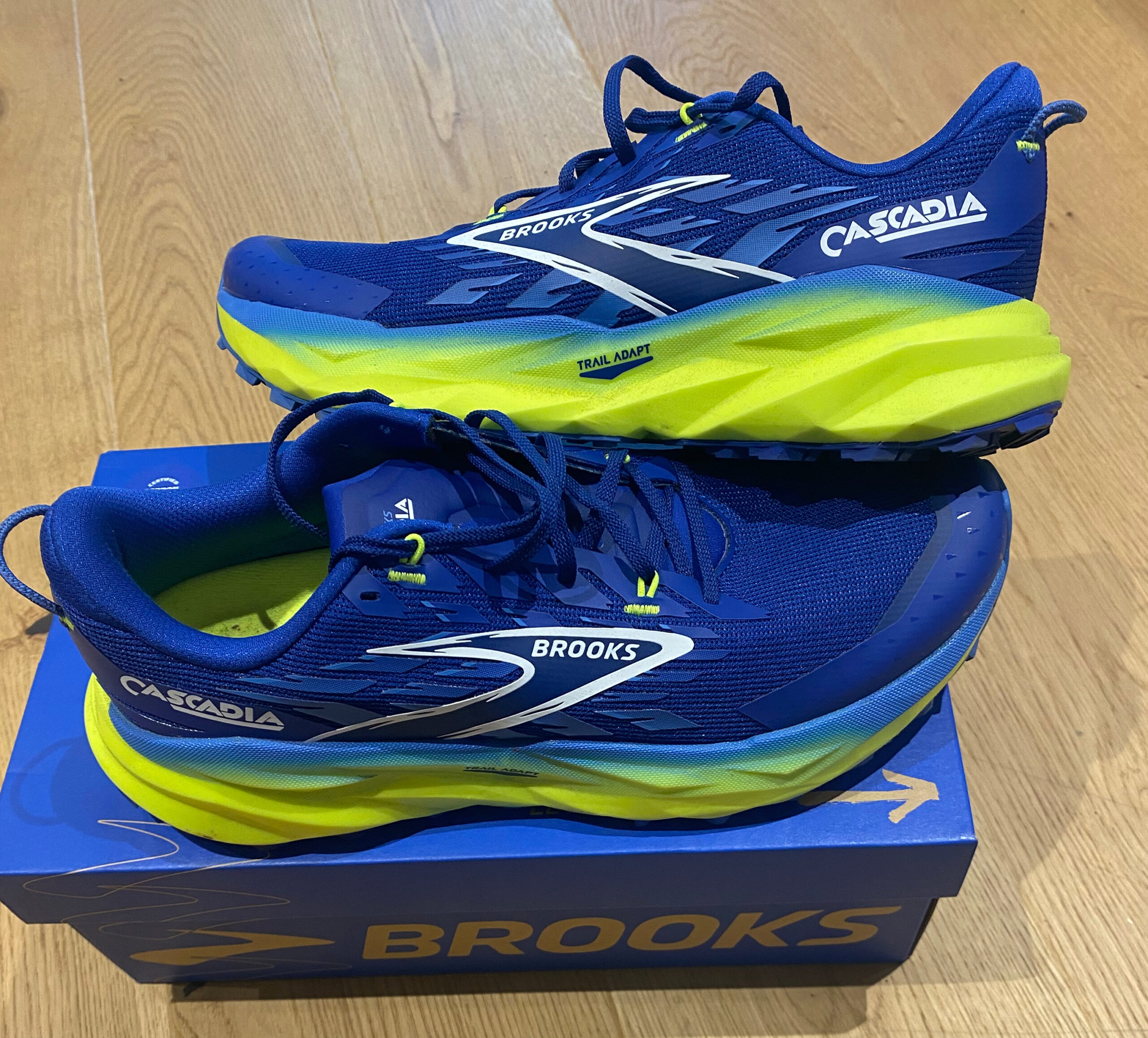
After 20 km of running on mixed trails (and some road for good measure), it’s easy to see why the new Brooks Cascadia 19 is going to be a big hit over the next 12 months.
The Cascadia family has always done well in the shop — repurchased year after year by a loyal fan base ranging from dog walkers to trail runners. It’s a model that ticks a lot of boxes, and the new version looks set to continue that trend. After my first 20 km, it’s already easy to see why.
What’s New
- DNA LOFT v3 Nitrogen-infused foam cushioning – softer and lighter than before
- Improved Trail Adapt System with a more flexible rock plate
- Weight (Men’s) : 303.3g (around 7g lighter) Weight (Women’s): 277.8g (around 8g lighter)
- Heel drop: 6mm
- Redesigned tongue for improved comfort
Fit & Comfort
Like most Brooks shoes, the fit is true to size — I’m perfectly fine in my usual UK 9s. The toe box feels roomy, which is ideal for those longer runs when your feet start to swell and your toes need space to splay.
A personal favourite feature is the tongue: soft, slightly padded, and very comfortable. The initial step-in feel is great, with a secure fit that hugs the ankle nicely. The slightly ridged laces stay put once tied — they won’t be coming undone until your run or walk is finished.
Cushioning & Ride
The updated DNA LOFT v3 foam is a real game changer — softer, lighter, and noticeably smoother underfoot. It makes those trail-to-road transitions feel more cushioned from heel to toe.
The midsole and outsole work beautifully together. The larger “hoof-shaped” heel design and improved flex grooves allow the shoe to move naturally with uneven terrain, while the flexible rock plate adds stability and protection without feeling rigid.
The TrailTack Green outsole grips exceptionally well — still one of the toughest and most reliable on the market, and now made with 25% recycled content. Traction is excellent across both wet and dry surfaces.
Final Thoughts
So far, I’ve only got good things to say about the Cascadia 19 — but I’ll hold off on a full pros and cons list until I’ve put a few more kilometres through them.
That said, I expect this shoe to be very popular over the next year. I wouldn’t be surprised to see more Cascadias on race days than usual (I do tend to check out what everyone’s wearing — sorry, not sorry!).
I’m genuinely excited to keep running and walking in these, and to see how they handle my favourite local trails.
Fun Fact
The Brooks Cascadia is named after the Cascadia mountain range — a vast, rugged region stretching through the Pacific Northwest of North America, including parts of Washington, Oregon, and British Columbia.
The name reflects the shoe’s trail heritage and adaptability to varied, often technical terrain — think muddy forests, rocky alpine paths, and everything in between.
Ultrarunning legend Scott Jurek, who helped design the original Cascadia, trained and raced extensively in that region. The name ties both to the geography and the ultrarunning culture of the Pacific Northwest — a nod to the kind of terrain the Cascadia was built to handle
I hope you enjoyed reading this early review — I’ll post a full review once I hit 100 km in the Cascadia 19.